
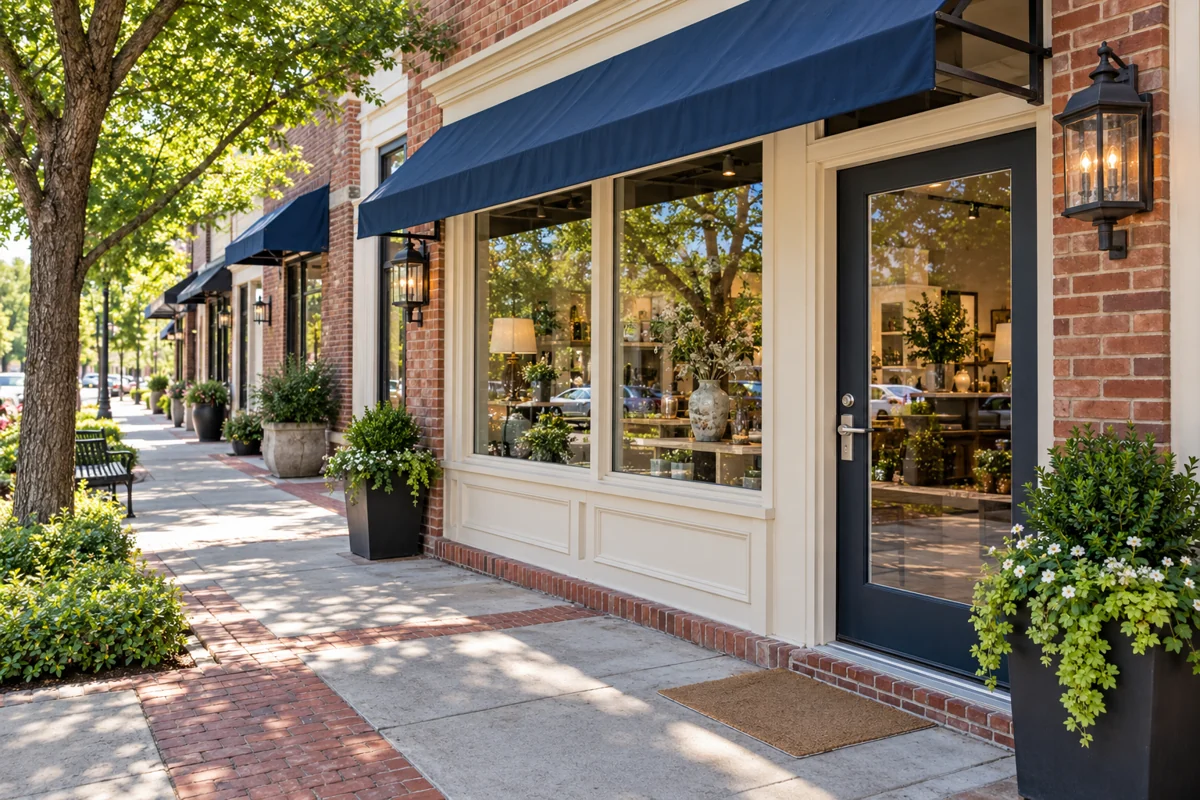
Which door needs attention?
A front customer entrance, staff side door and individual office lock serve different purposes. Give the business address, suite number and the entrance in question. Explain whether the door is open, closed or stuck, and whether anyone is currently unable to get in or out.
In Old Town, homes, shops and restaurants sit around the same walkable district. A business name or “the square” is less useful than the actual street address and correct door. If your address is in an adjoining city, confirm that location and availability rather than assuming the postal label establishes coverage.
Separate access from the fault
A lost staff key raises an access-control question in the everyday sense: who should still be able to enter? A key that turns poorly or a door that catches is a condition problem. Explain both if they occur together, but do not assume one type of work will resolve the other.
Rekeying suitable existing locks may be relevant after a key change or staff handover. For a mechanical problem, the lock repair information explains why the door, latch and key need to be considered together. Specialist electronic access systems and industrial door equipment require a separate scope discussion.
Make the approval straightforward
Decide who can approve the work and any change to the price or scope. That may be the business owner, an authorized manager or the property manager. If the premises are leased, check which parts of the doorway belong to the tenancy and which remain the landlord's responsibility.
Ask how the proposed work affects the existing keys and other users before agreeing. Keep a record of the decision, arrange a clear handover of any new keys and tell affected staff about an authorized change. A repair to one lock should not leave uncertainty about which door each key opens.
- Full business address and suite.
- Door location and plain-language symptoms.
- Name and callback number of the authorized contact.