
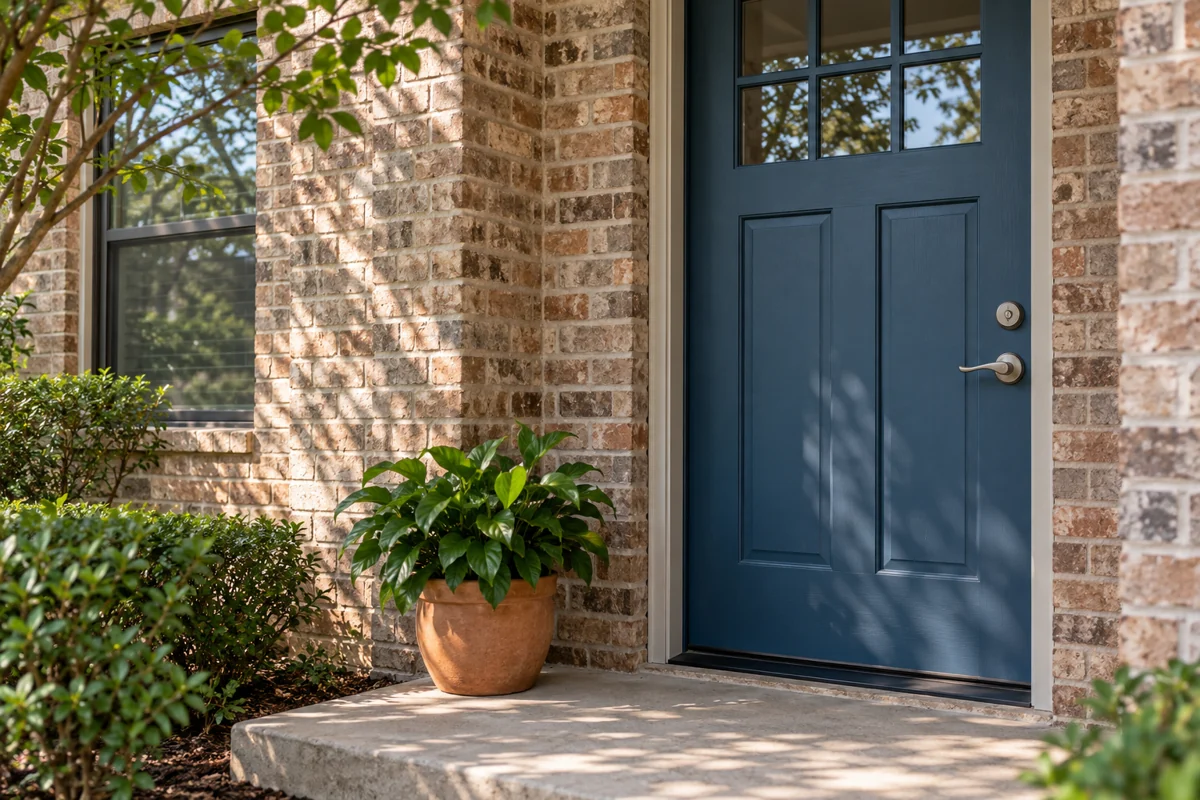
A new home, an old set of keys
After a move, a working key does not tell you how many other copies remain. List the exterior doors you actually use, including a side entrance or the door between the home and garage. Count the locks rather than assuming every door uses the same mechanism.
If the existing locks are suitable, rekeying may allow a new key to operate them without changing all the visible hardware. It is an assessment, not a promise that every lock can be kept or that different locks can share one key. The keys after a move guide explains how to prepare that discussion.
Keep a symptom separate from a solution
A key that is hard to turn may feel like a reason to buy a new lock. Yet the way the door closes, the latch position and the condition of the key all matter. Describe what you see: whether the door shuts freely, whether the key behaves differently with the door open, and when the problem began. Do not force a test if the door is already jammed.
Our lock repair page covers the useful observations to share. Repair, adjustment and replacement are different options; the right choice depends on what is found.
Owner, renter or helping a relative?
Make sure the person who can authorize the work is involved. If you rent, speak with the landlord or property manager before arranging a change. If you are helping someone else, ask what proof or direct approval will be needed. Having a spare key does not by itself settle permission to alter a lock.
Old Town mixes residential and commercial addresses, while other calls may involve a unit or a shared entrance. Give the full address and identify your door precisely. A shared building entrance and a private dwelling lock may have different approval requirements.